

10 Tips for Getting Your Pricing Right
Creating custom apparel is one thing, but knowing how to price it for profit is just as important. Whether you're decorating a dozen T-shirts or fulfilling an order of hundreds, understanding your costs can help you protect your margins and grow your business.
Before sending your next customer quote, here are 10 pricing tips every apparel decorator should keep in mind.
1. Account for Mistakes and Waste
Even experienced decorators run into the occasional misprint, damaged garment, or application mistake. While these things may seem minor, replacing materials can quickly eat into your profits.
Consider building a small allowance for waste into your pricing, especially when working with unfamiliar garments, specialty transfers, or large orders.
PRO TIP: Keep a few extra blank garments and transfers on hand when possible, so one mistake doesn't delay an entire order.
2. Consider Order Quantity
The number of shirts you're decorating can have a big impact on your cost per piece. Larger orders may qualify for lower transfer pricing, bulk garment discounts, and more efficient production.
Before offering customers a volume discount, calculate how much you're actually saving at different order quantities.
PRO TIP: Check for transfer quantity breaks before quoting a project. Ordering strategically can help lower your costs without sacrificing your margins.
3. Don't Undervalue Yourself
Your time is worth more than the minutes spent operating a heat press.
Artwork preparation, customer communication, order setup, pressing, quality checks, folding, and packaging all contribute to the finished product.
Make sure you're accounting for the entire process when calculating labor costs.
FM QUICK TIP: Track how long different types of projects take from start to finish. This will help you estimate labor more accurately on future orders.
4. Know Your Minimum
Small orders can require just as much preparation as larger ones. Whether you're decorating two shirts or twenty, you may still need to prepare artwork, communicate with the customer, and set up your equipment.
Establishing a minimum order charge helps ensure smaller projects are worth your time.
FM QUICK TIP: Consider setting a minimum project fee rather than requiring a minimum quantity. This gives customers flexibility while protecting your business.
5. Remember Shipping
Shipping is one of those expenses that's easy to overlook when calculating project costs.
Remember to account for freight on incoming blank garments and transfers, packaging materials, and any shipping or delivery expenses associated with the finished order.
Even a few extra dollars can affect your profit, especially on smaller projects.
FM QUICK TIP: Decide whether shipping will be included in your selling price or charged separately, and make that clear in your customer quotes.
6. Understand Markup vs. Margin
Markup and profit margin might sound interchangeable, but they're two different calculations.
Markup measures how much you increase your price above your cost.
Gross margin measures what percentage of your selling price remains after the costs included in your calculation.
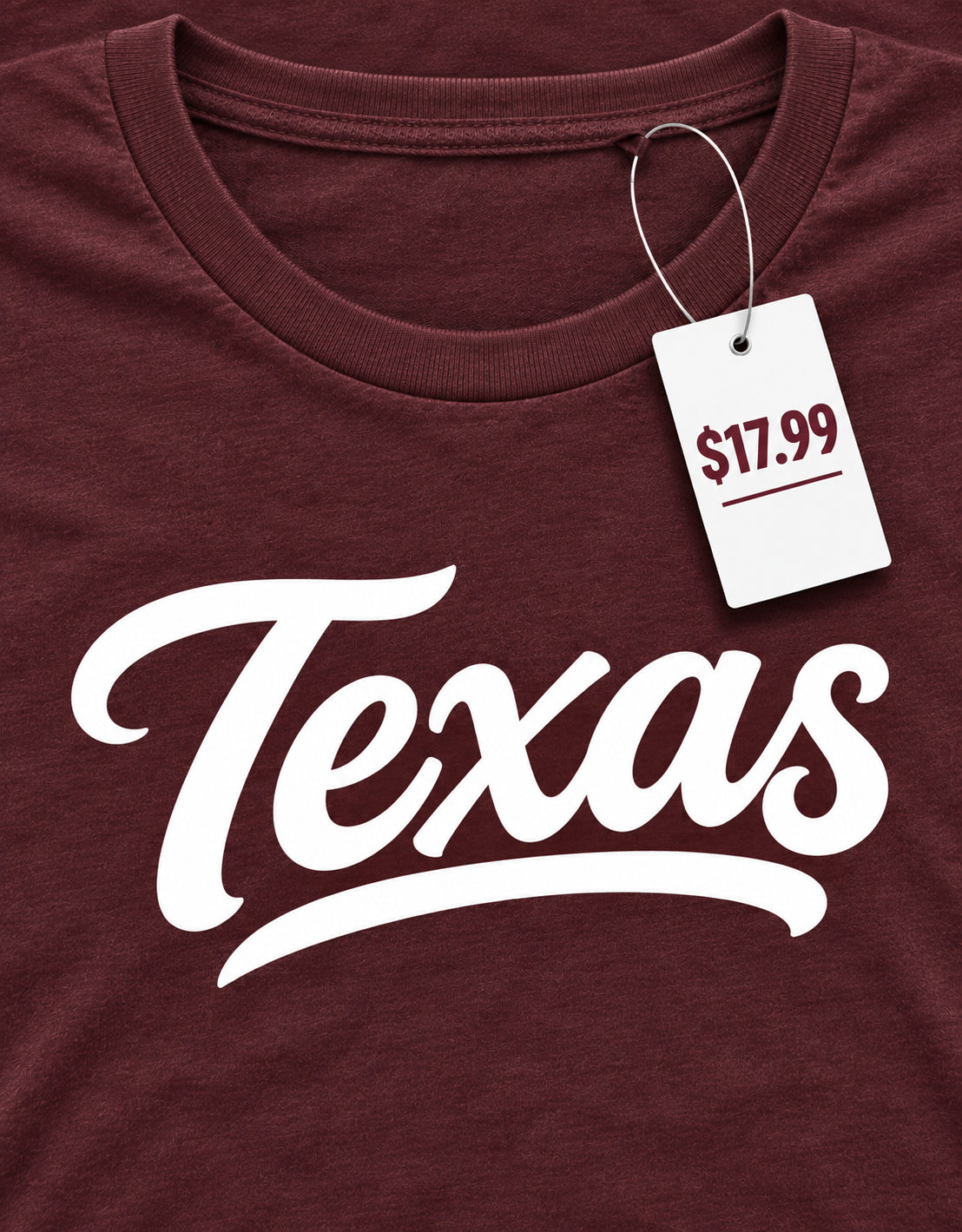
For example, if a decorated T-shirt costs you $8.50 to produce and you sell it for $17.00, you're making $8.50 in gross profit per shirt.
That's a 100% markup on cost, but a 50% gross margin on the selling price.
Understanding the difference can help you establish pricing that meets your profit goals.
FM QUICK TIP: When setting prices, work backward from your desired gross margin instead of simply doubling your costs.
7. Charge for Rush Orders
Last-minute orders can create additional expenses, from expedited shipping to overtime and production schedule changes.
If a customer needs an order faster than your standard turnaround, consider charging a rush fee that reflects the additional time and resources required.
FM QUICK TIP: Establish a clear rush-order policy so customers understand when additional charges may apply.
8. Factor in Design Complexity
Not every decoration project requires the same amount of work.
A simple, single-location design may be relatively straightforward, while an order involving multiple print locations, artwork revisions, or specialty decoration methods may require additional time and materials.
Your pricing should reflect the actual complexity of the project.
FM QUICK TIP: Consider charging separately for artwork services, additional print locations, or extensive design revisions.
9. Don't Forget Overhead
Your blank garments and transfers aren't your only business expenses.
Equipment maintenance, electricity, rent, software subscriptions, insurance, and other operating costs all contribute to what it takes to run your business.
While these expenses may not be tied to one specific shirt, they still need to be covered by the revenue your business generates.
FM QUICK TIP: Estimate your monthly overhead and divide it across your expected production volume to establish a starting point for overhead cost per garment.
10. Review Your Pricing Regularly
The prices you charge today may not make sense six months from now.
Garment costs, transfer pricing, shipping rates, and operating expenses can change over time. Reviewing your pricing regularly helps ensure your quotes reflect your current costs.
It's also a good opportunity to evaluate which types of projects are most profitable for your business.
FM QUICK TIP: Schedule a quarterly pricing review to evaluate your costs, margins, and most popular products.
What Does It Really Cost to Decorate a T-Shirt?
Let's put these tips into practice with a simple pricing example.
| Your Costs | Per Shirt |
|---|---|
| Blank T-Shirt | $4.00 |
| Heat Transfer | $2.00 |
| Labor | $1.50 |
| Overhead | $1.00 |
| Total Cost | $8.50 |
If you sell that finished shirt for $17.00, here's what your numbers look like:
Selling Price: $17.00
Gross Profit: $8.50 per shirt
Gross Margin: 50%
Now imagine applying that same pricing to an order of 200 shirts. At $8.50 in gross profit per shirt, that's $1,700 in gross profit on one order!
Of course, these numbers are just an example. Your actual costs will depend on your garments, decoration method, order size, and other project expenses.
The important thing is understanding your numbers before you send a quote.
Price Your Next Project
Profitable pricing isn't just about charging more. It's about understanding what goes into every order and making informed decisions that support your business.
Whether you're just getting started or looking to improve your existing pricing strategy, a little planning can go a long way.
Need help calculating your next project?
Use our pricing calculator to estimate your costs, selling price, and gross profit before you quote your next apparel order.
And when you're ready to order transfers, keep our FM Expressions Pricing Cheat Sheet handy for quick access to transfer pricing.